
The Best Lens for Portrait Photography Beginners: 5 Picks That Nail Creamy Backgrounds in 2026
With the 2026 holiday portrait season ramping up and social feeds flooded with AI-generated “perfect” faces, there’s never been a better time to master authentic portrait photography. While computational photography tries to fake shallow depth of field, nothing beats the organic look of a real lens rendering skin tones and bokeh. If you’re searching for the best lens for portrait photography beginners, you’re likely overwhelmed by choices ranging from $125 nifty fifties to $2,000 professional glass.
Here’s the truth: you don’t need to spend thousands to get professional-looking portraits. You just need to understand focal length, aperture, and how they affect your subject’s features. In this guide, we’ll break down exactly which lenses deliver that creamy background blur without breaking the bank, and why your choice matters more than your camera body.
Why Your Kit Lens Is Holding Back Your Portraits
Most beginners start with an 18-55mm kit zoom, and while it’s versatile, it’s working against you for portraits. At 55mm f/5.6, you’re fighting physics to get background separation. The aperture blades close down too far, and the focal length forces you to stand awkwardly close for headshots, distorting facial features.
Portrait photography demands two things: compression and light gathering. Compression (achieved with longer focal lengths) flatters faces by slightly narrowing the nose and bringing features into pleasing proportion. Light gathering (wide apertures like f/1.8 or f/1.4) creates that dreamy depth of field where eyes stay tack-sharp while ears and background melt away.
A dedicated portrait lens solves both problems instantly. For under $200 in most cases, you can upgrade from “smartphone look” to “professional portfolio” with a single purchase.
The Classic Choice: 50mm f/1.8 (The Nifty Fifty)
If you ask any working photographer about the best lens for portrait photography beginners, nine out of ten will mention the 50mm f/1.8 first. Canon’s RF 50mm f/1.8 STM, Nikon’s Z 50mm f/1.8 S, and Sony’s FE 50mm f/1.8 all deliver 90% of the performance of lenses costing five times more.
Why it works:
- Natural perspective on full-frame cameras mimics human vision
- f/1.8 aperture lets in 8x more light than your kit lens at f/5.6
- Compact size encourages you to carry it everywhere
- Price: Typically $125-$300 depending on mount
On APS-C crop sensors (like the Canon R50, Nikon Z50, or Sony a6700), a 50mm lens becomes 75-80mm equivalent—absolutely perfect for tight headshots. You can stand 6-8 feet away, giving your subject breathing room while filling the frame with their face.
Pro tip: Shoot at f/2.8 instead of wide open at f/1.8. You’ll gain critical sharpness across the eyes while maintaining beautiful background blur, and you won’t struggle with razor-thin depth of field that misses focus on moving subjects.
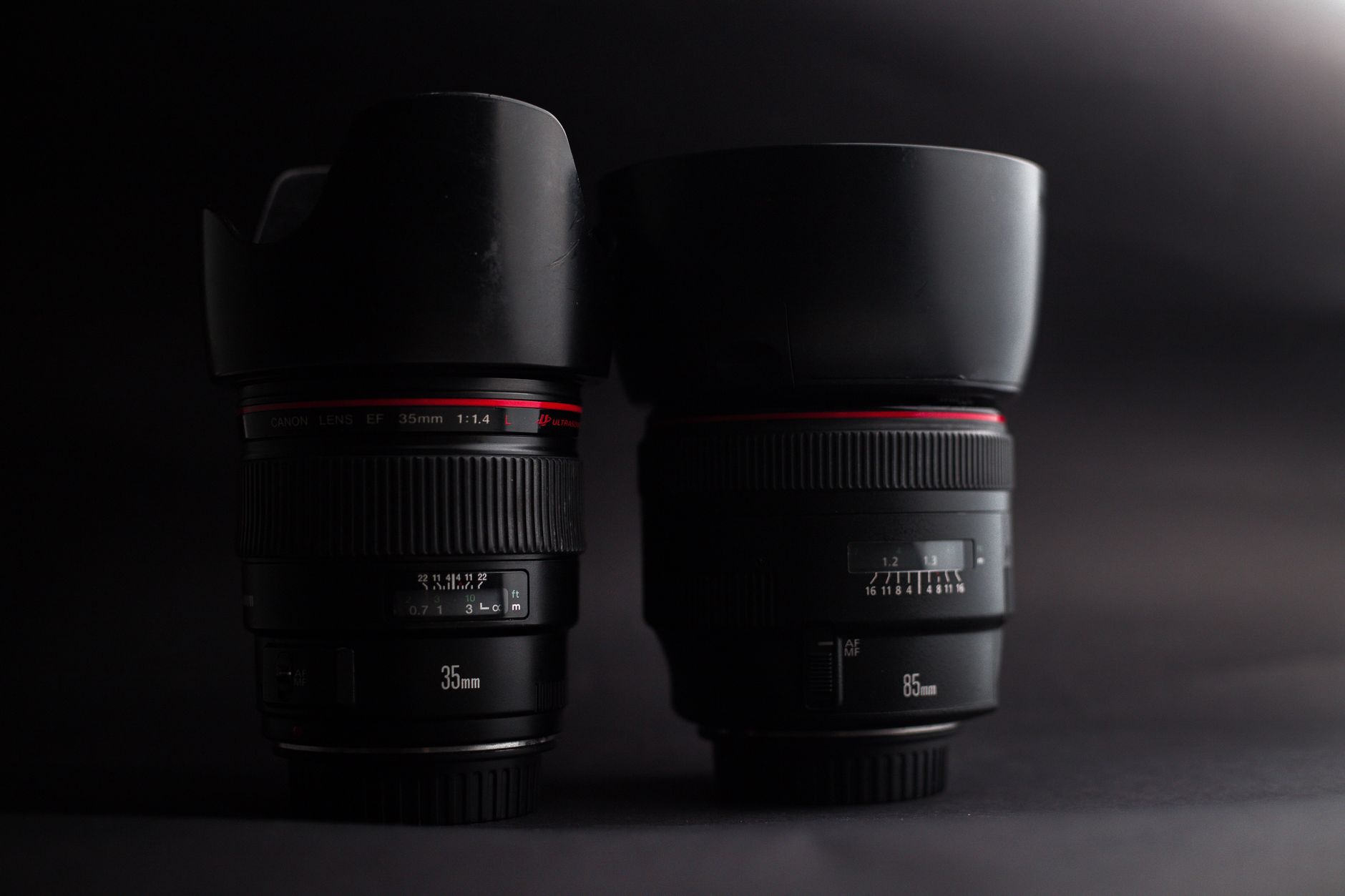
The Flattering Specialist: 85mm f/1.8
Step up to an 85mm f/1.8, and you enter the realm of dedicated portrait glass. This focal length has been the gold standard since the film era because it eliminates facial distortion completely. At 85mm, you stand about 10-12 feet from your subject for a head-and-shoulders shot, creating comfortable working distance and stunning compression.
Best for:
- Outdoor portraits with space to back up
- Full-frame camera users wanting that “professional look”
- Photographers who prioritize background blur above all else
The 85mm f/1.8 options (like the Sony FE 85mm f/1.8 or Canon RF 85mm f/2 Macro) typically cost $500-$700—more than a nifty fifty but half the price of f/1.4 versions. The difference between f/1.8 and f/1.4 is minimal in real-world shooting, but the weight and cost savings are massive.
Watch out for: On crop sensor cameras, 85mm becomes 127-136mm equivalent. That’s too long for small indoor spaces. You’ll find yourself backing into walls to fit subjects in frame.
The Environmental Storyteller: 35mm f/1.8
While 50mm and 85mm dominate discussions about the best lens for portrait photography beginners, the 35mm f/1.8 deserves serious consideration if you shoot environmental portraits—photos that show your subject within their surroundings.
Think coffee shop owners at their counters, artists in studios, or couples in urban settings. The 35mm captures context without distortion (unlike wider 24mm lenses that stretch features). On APS-C cameras, 35mm becomes roughly 50mm equivalent, making it the perfect “walkaround” portrait lens.
Advantages:
- Versatility: Shoot full-body portraits from 8 feet away or step closer for half-body shots
- Low light performance: f/1.8 apertures on modern 35mm lenses handle dim indoor spaces
- Storytelling: Shows the person in their element, adding narrative depth
Look for options like the Fujifilm XF 35mm f/1.4 (if you’re in that system) or the Sigma 35mm f/1.4 Art for DSLR users adapting to mirrorless.
Prime vs. Zoom: Why Fixed Focal Lengths Win for Beginners
You might wonder about 24-70mm f/2.8 zooms—they cover all these focal lengths in one package. However, for beginners, prime lenses (fixed focal length) teach composition better and deliver superior image quality per dollar.
The prime advantage:
- Weight: A 50mm f/1.8 weighs 5-6 ounces; a 24-70mm f/2.8 weighs 2 pounds
- Aperture: f/1.8 gathers 4x more light than f/2.8, crucial for indoor natural light portraits
- Cost: Three primes (35mm, 50mm, 85mm) cost less than one f/2.8 zoom
- Discipline: Zooming with your feet forces you to think about perspective and framing
Start with one prime. Master it for three months. Learn how it sees the world. Then expand.
Conclusion: Start Simple, Shoot Wide Open
Choosing the best lens for portrait photography beginners ultimately depends on your camera sensor size and shooting style. For most people starting out, the 50mm f/1.8 offers the perfect balance of affordability, image quality, and versatility. It forces you to move, think, and engage with your subject rather than relying on zoom convenience.
If you shoot full-frame and primarily work outdoors, the 85mm f/1.8 delivers that magazine-cover compression immediately. Crop sensor shooters in tight spaces should consider the 35mm f/1.8 for environmental context.
Remember: the lens is just a tool. The real magic happens when you connect with your subject, find beautiful light (window light is your friend), and shoot wide open to isolate what matters—the person in front of you. Pick one lens from this guide, commit to shooting 100 portraits with it this month, and watch your work transform from snapshots to art.