
The Best Lens for Portrait Photography Beginners (2026 Guide)
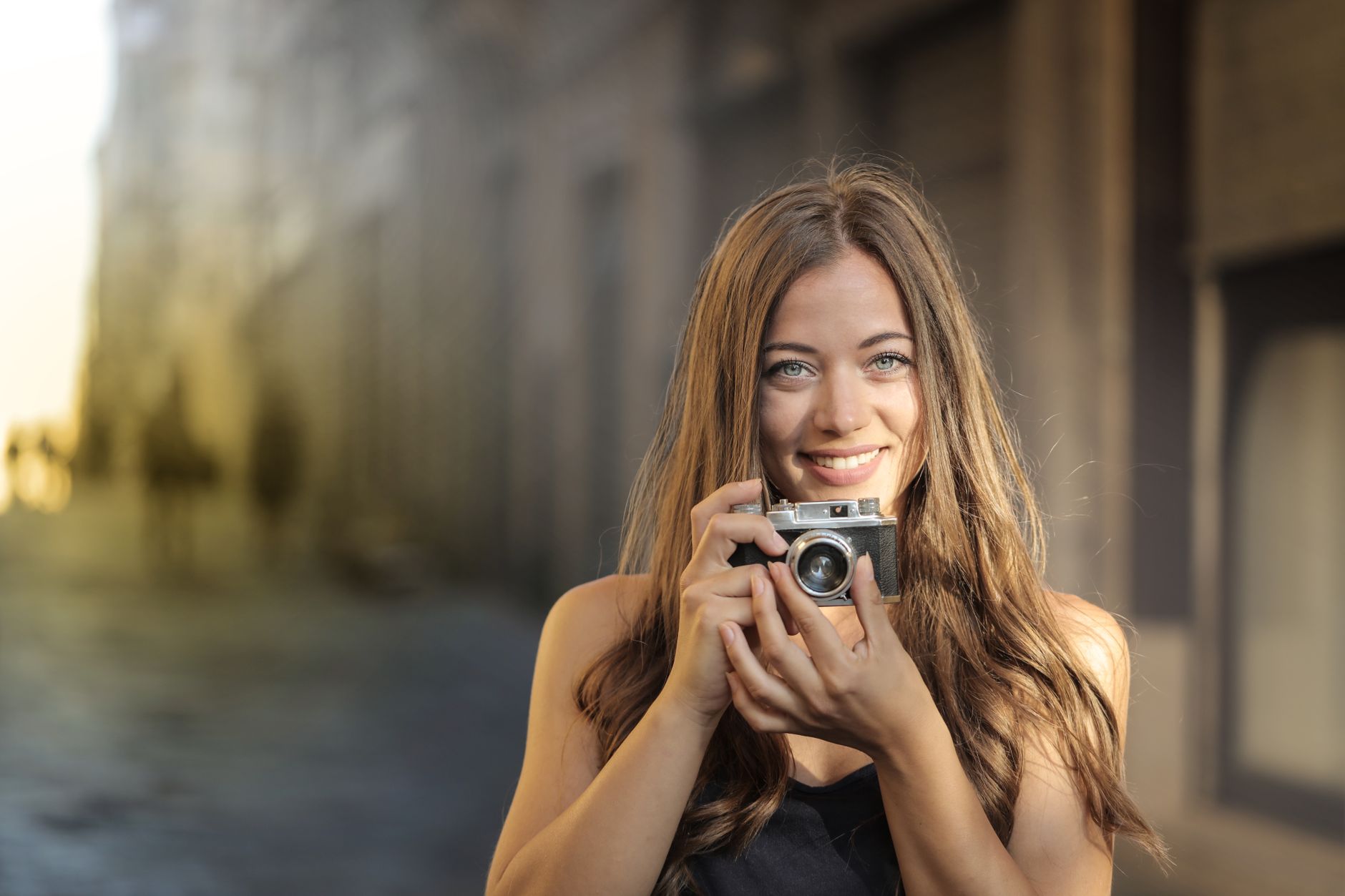
The photography world is buzzing right now as major manufacturers roll out their autumn 2026 lens lineups, and social media feeds are flooded with creamy bokeh shots from the latest mirrorless releases. But here’s the truth that often gets lost in the hype: you don’t need the newest $2,000 glass to capture stunning portraits. Finding the best lens for portrait photography beginners is less about chasing specs and more about understanding how focal length, aperture, and your shooting style intersect.
Whether you just unboxed your first mirrorless camera or you’re looking to upgrade from the kit zoom, this guide will help you navigate the crowded lens market with confidence. We’ll break down exactly what makes a portrait lens special, which models deliver professional results without the professional price tag, and how to avoid the common mistakes that leave beginners with buyer’s remorse.
Why Your Kit Lens Isn’t Cutting It (And What Actually Matters)
Most cameras ship with an 18-55mm or 16-50mm zoom lens. While these are fine for learning composition, they typically max out at f/3.5-5.6, which severely limits your ability to blur backgrounds and shoot in low light. When you search for the best lens for portrait photography beginners, you’re really looking for three key characteristics:
Wide maximum aperture (f/1.8 or wider): This creates that dreamy background separation that makes subjects pop. A lens at f/1.8 lets in four times more light than one at f/3.5, transforming your indoor and evening portraits.
Flattering focal length: On full-frame cameras, 50mm to 85mm is the sweet spot. Crop sensor (APS-C) shooters should look for 35mm to 56mm to achieve similar framing without distortion.
Fast, quiet autofocus: Modern eye-tracking AF systems work best with lenses that can keep up. Look for STM (Canon), AF-P (Nikon), or linear motor designations for smooth, silent focusing.
The Nifty Fifty: Why 50mm f/1.8 Rules for Beginners
Ask any working portrait photographer what lens they recommend for newcomers, and 90% will say the “nifty fifty”—a 50mm f/1.8 prime lens. Here’s why this humble piece of glass remains undefeated in 2026:
Unbeatable value: The Canon RF 50mm f/1.8 STM, Nikon Z 50mm f/1.8 S, and Sony FE 50mm f/1.8 all retail between $200-$350. Third-party options from Sigma and Tamron often cost even less while delivering 95% of the performance.
Versatility: On a full-frame camera, 50mm gives you a natural perspective similar to human vision. On crop sensors, it behaves like an 80mm lens—perfect for headshots and half-body portraits.
Forces creativity: Without zoom, you’ll move your feet and engage with your subject. This physical interaction often results in more dynamic compositions and better communication.
Pro tip: If you shoot primarily indoors or in tight spaces, consider a 35mm f/1.8 instead. On crop sensors, this gives you roughly 50mm equivalent framing with more room to work.
Stepping Up: 85mm and Beyond for Creamy Compression
Once you’ve mastered the 50mm, you might crave that ultra-compressed, magazine-cover look. This is where 85mm f/1.8 lenses enter the conversation as contenders for the best lens for portrait photography beginners ready to specialize.
The 85mm advantage: This focal length physically compresses facial features slightly, creating a flattering slimming effect. It also allows you to maintain comfortable working distance—typically 6-10 feet from your subject—which helps nervous sitters relax.
Budget-friendly options:
- Sony FE 85mm f/1.8 ($600): Lightweight, razor-sharp, and focuses fast enough for active kids
- Canon RF 85mm f/2 Macro IS STM ($600): Doubles as a macro lens for detail shots
- Nikon Z 85mm f/1.8 S ($800): Slightly pricier but delivers professional-grade optics
When to skip 85mm: If you shoot in small apartments or prefer environmental portraits that show context, 85mm can feel restrictive. It requires more space to step back than 50mm.
Crop Sensor Considerations: APS-C and Micro Four Thirds
The best lens for portrait photography beginners varies significantly depending on your camera’s sensor size. Here’s how to adapt your strategy:
For APS-C cameras (Canon EF-M, Nikon DX, Sony E, Fuji X):
- 35mm f/1.8 becomes your “nifty fifty” equivalent
- 56mm f/1.4 (Sigma makes excellent versions) mimics the 85mm look
- Consider the Fujifilm XF 50mm f/2 R WR for weather-sealed durability
For Micro Four Thirds (Olympus/OM System, Panasonic):
- 45mm f/1.8 lenses provide the 90mm equivalent field of view
- The Panasonic Leica DG Nocticron 42.5mm f/1.2 is legendary but pricey; the Olympus 45mm f/1.8 delivers similar results for under $300
The crop factor math: Multiply your lens focal length by your crop factor (1.5x for Nikon/Sony APS-C, 1.6x for Canon, 2x for Micro Four Thirds) to see the full-frame equivalent. A 35mm lens on a Canon crop body gives you 56mm—ideal for portraits.
Budget Breakdown: Getting Professional Results at Every Price Point
You don’t need to spend thousands to get started. Here’s how to maximize your investment in 2026:
Under $250:
- Used Canon EF 50mm f/1.8 STM (adaptable to mirrorless)
- Yongnuo 50mm f/1.8 (surprisingly decent for the price)
- Vintage manual focus lenses with adapters (great for learning)
$250-$500:
- New native 50mm f/1.8 lenses for any system
- Sigma 56mm f/1.4 DC DN (for crop sensors)
- Tamron 35mm f/2.8 Di III OSD (Sony full-frame)
$500-$800:
- Native 85mm f/1.8 options
- Sigma 85mm f/1.4 DG DN Art (heavier but stunning)
- Zeiss Batis 85mm f/1.8 (if you find a deal)
Remember: Buying used from reputable dealers like KEH, MPB, or B&H’s used department can save you 30-40% while still getting warranty coverage.
Avoid These Common Beginner Mistakes
Even with the right lens, technique matters. Watch out for these pitfalls:
Shooting wide open constantly: While f/1.8 is beautiful, it creates razor-thin depth of field. At close distances, you might get one eye sharp while the other blurs. Stop down to f/2.8 or f/4 for group shots or when precise focus is critical.
Ignoring minimum focus distance: Portrait lenses often can’t focus closer than 2-3 feet. If you try to shoot tight headshots too close, you’ll hit the lens’s limit. Step back and crop instead.
Forgetting about stabilization: Many prime lenses lack image stabilization. If your camera body doesn’t have IBIS (in-body stabilization), maintain shutter speeds of at least 1/focal length (e.g., 1/85th for an 85mm lens) to avoid blur.
Overlooking weight: That f/1.4 lens might seem appealing, but if it’s too heavy to carry comfortably, you’ll leave it at home. The best lens for portrait photography beginners is the one you’ll actually bring to shoots.
Conclusion: Start Simple, Upgrade Strategically
Finding the best lens for portrait photography beginners doesn’t require endless research or maxing out your credit card. Start with a 50mm f/1.8 (or 35mm if you’re on crop sensor), master shooting at f/2.8-f/4 for consistent results, and learn to see light before you obsess over gear.
The current market offers incredible value, with manufacturers competing fiercely for entry-level shooters. Whether you choose the Canon RF 50mm f/1.8, Nikon Z 50mm f/1.8, or a third-party alternative, you’re getting optics that would have cost thousands just a decade ago.
Your next step: Rent your top two choices for a weekend (services like LensRentals make this affordable), shoot the same subject with both, and trust your eyes over the spec sheets. The lens that feels right in your hands and inspires you to shoot more is ultimately the best choice for your portrait journey. Now get out there and start creating—your subjects are waiting.