
Camera Lens Aperture Explained for Beginners: The 2026 Guide to Shooting Like a Pro Without the Confusion
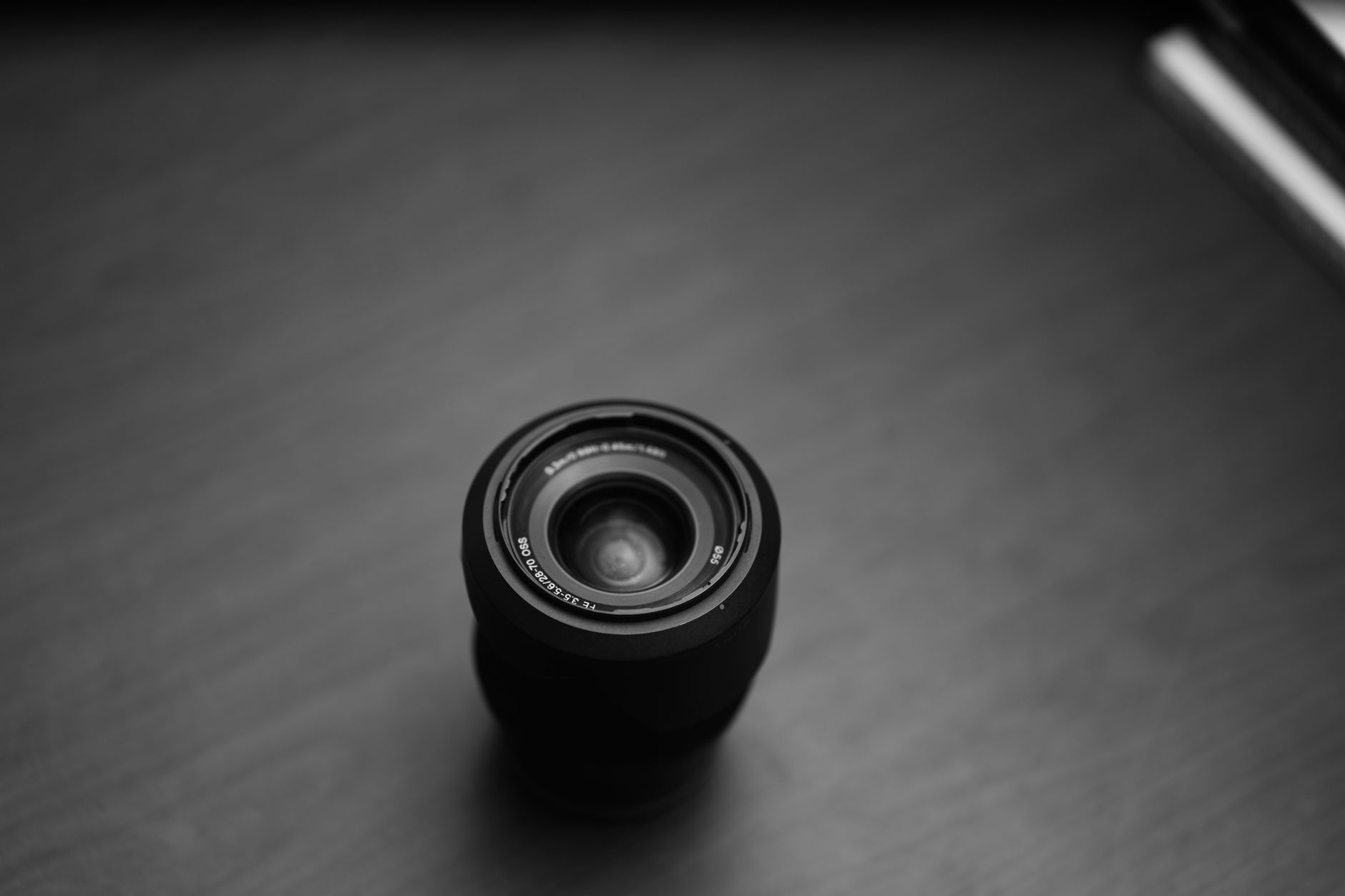
With the 2026 back-to-school season in full swing and Canon, Nikon, and Sony all pushing aggressively priced f/1.8 prime lens bundles for new hybrid shooters, more beginners than ever are staring at their camera dials wondering what that mysterious “f” number actually does. You’ve seen the gorgeous portraits with creamy, blurred backgrounds all over Instagram and TikTok this summer. You’ve read that “f/2.8 is good” without understanding why. And you’re probably frustrated that your first “real” camera still produces photos that look, well, phone-like.
Camera lens aperture explained for beginners doesn’t need to be complicated. This guide strips away the jargon and gives you practical, numbered examples you can test today—whether you’re shooting on a $400 used Sony A6000 or splurging on the new Fujifilm X-M5 kit everyone’s talking about this September.
What Aperture Actually Means (No Math Required)
Think of aperture as your lens’s pupil. Just like your eye opens wide in dark rooms and squints in bright sunlight, your lens has an adjustable opening that controls two things simultaneously: how much light hits your sensor and how much of your scene stays sharp.
That “f” number? It represents the ratio of your lens’s focal length to the opening’s diameter. Here’s the counterintuitive part that trips up every beginner: smaller f-numbers mean BIGGER openings. f/1.8 is wide open. f/22 is practically pinched shut.
- f/1.4 to f/2.8: Wide open. Maximum light, minimum depth of field. Your subject pops; backgrounds melt into creamy bokeh. Think portrait photographers chasing that summer 2026 look.
- f/4 to f/5.6: The “everyday” zone. Moderate light, moderate sharpness throughout. Your new Nikon Z30 kit lens lives here at its widest setting.
- f/8 to f/11: The sweet spot for many lenses. Often the sharpest optical performance, with enough depth of field for group shots and travel scenes.
- f/16 and smaller: Diminished light, diffraction softness creeping in. Useful for specific effects, but not your default.
Pro tip from our testing bench: most budget lenses (under $500 in 2026) perform noticeably softer at their widest aperture. Shoot at f/2.8 on an f/1.8 lens if you want maximum sharpness with still-excellent background separation.
How Aperture Controls Depth of Field (The Visual Secret)
Depth of field is simply how much of your photo appears acceptably sharp, measured from your focus point forward and backward. Aperture is your primary creative control here, and understanding this transforms your images immediately.
Real-world test you can do in 10 minutes:
Set your camera to Aperture Priority mode (A or Av on the dial). Frame a friend or a coffee mug about 6 feet away with bookshelf or window behind. Shoot the same composition at:
- f/1.8: Subject razor-sharp, background becomes abstract color. Instagram portrait mode achieved with actual glass, not computational blur.
- f/5.6: Subject sharp, background readable but soft. Environmental portrait territory.
- f/11: Subject and background both fairly sharp. Documentary or travel context preserved.
Three variables amplify or reduce this effect: focal length (longer lenses compress and exaggerate blur), subject distance (closer focus = shallower depth), and sensor size (full-frame cameras produce shallower depth at equivalent apertures than APS-C or Micro Four Thirds).
The 2026 trend toward compact APS-C bodies like the Sony ZV-E10 II and Fujifilm X-T50 means beginners need to understand this math: your f/1.4 lens on APS-C produces roughly equivalent depth of field to f/2.1 on full-frame. Still gorgeous, but not identical. Plan your lens purchases accordingly.
Aperture and Light: The Exposure Triangle Connection
Aperture doesn’t work alone. It partners with shutter speed and ISO in the exposure triangle. When you widen your aperture from f/5.6 to f/2.8, you double the light hitting your sensor. Your camera can then:
- Use faster shutter speed to freeze motion (crucial for FIFA World Cup 2026 sports photography, where pros are shooting at f/2.8 and 1/1000s)
- Drop ISO for cleaner, noise-free images (essential for those golden hour portraits everyone’s posting)
- Or both, in varying balance
Practical 2026 scenario: Indoor birthday party, ambient light only. Your kit lens at f/5.6 forces ISO 6400 and 1/30s shutter—grainy, blurry disappointment. An affordable 50mm f/1.8 prime (Nikon, Canon, Sony, all under $200 used) opens to f/1.8. Same scene: ISO 800, 1/125s. Clean, sharp, properly exposed. That single lens purchase transforms more beginner photos than any camera body upgrade.
Memorize these full-stop increments—each step doubles or halves the light: f/1.4, f/2, f/2.8, f/4, f/5.6, f/8, f/11, f/16. Modern cameras offer third-stop increments between these, but understanding the full stops helps you calculate exposure changes mentally.
Choosing the Right Aperture for Common 2026 Shooting Scenarios
Stop guessing. Here’s what working photographers actually set:
Portraits (individual): f/1.8 to f/2.8. Isolate your subject. Watch eye focus critically—at f/1.8, depth of field can be razor-thin. Focus on the nearest eye, always.
Portraits (groups of 2-3): f/4 to f/5.6. Ensure all faces fall within the sharp zone. At f/1.8, someone’s nose is sharp while their ears blur unflatteringly.
Street photography: f/5.6 to f/8. Zone focus pre-set, grab shots without refocusing. The 2026 silent-shooting trend on mirrorless bodies pairs perfectly with this “set and forget” aperture approach.
Landscapes: f/8 to f/11. Front-to-back sharpness. Don’t default to f/22—diffraction actually softens your entire image on high-resolution sensors.
Product/food (the booming 2026 side hustle): f/4 to f/8. Show texture and form without sterile clinical flatness. Many successful Etsy sellers shoot at f/5.6 specifically.
Astrophotography: f/1.4 to f/2.8 maximum. Gather every photon. Our dedicated astro settings guide covers the balancing act with star trailing; aperture is your starting point.
Common Beginner Aperture Mistakes (And How to Fix Them)
Mistake 1: “I’ll just shoot everything wide open because it looks professional.”
Your 50mm f/1.8 at f/1.8 produces dreamy portraits but misses focus on moving toddlers. Your landscape at f/1.8 has one sharp rock and impressionist mountains. Aperture is a tool, not a default.
Mistake 2: Ignoring the “sweet spot.”
Every lens has an aperture range of peak optical performance, typically 2-3 stops closed from maximum. Test your own: shoot a brick wall or newspaper at each aperture, pixel-peep at 100%. For most sub-$500 lenses in 2026, that’s f/4 to f/5.6. Use wide apertures when you need them; stop down when you don’t.
Mistake 3: Forgetting that aperture affects flash exposure too.
In manual flash photography (our beginner flash guide covers this), aperture controls flash exposure while shutter speed controls ambient. They’re not independent—plan accordingly.
Mistake 4: Buying f/2.8 zooms when f/4 suffices.
The 2026 market offers excellent f/4 zooms (Canon RF 24-105mm f/4L, Sony 20-70mm f/4 G) that are lighter, cheaper, and sharper than their f/2.8 equivalents. If you shoot landscapes, travel, or daytime events, that extra stop costs you $800 and 300 grams. Be honest about your actual needs.
Your Next Steps: From Understanding to Mastery
Camera lens aperture explained for beginners ultimately comes down to this: it’s your creative volume knob for light and focus. Wider apertures (smaller f-numbers) give you that cinematic isolation everyone craves. Narrower apertures (larger f-numbers) give you contextual clarity and often sharper optical performance.
This week, commit to one exercise: shoot the same subject at every full-stop aperture your lens allows. Load them side-by-side in your editing software. See the difference. Feel the control shift from your camera’s algorithms to your creative intention.
The best photographers in 2026 aren’t using the most expensive gear—they’re making deliberate choices. Aperture is your first and most powerful choice. Master it, and every other camera setting becomes easier to understand.
Ready to pair your new aperture knowledge with the right glass? Our guide to the best lens for portrait photography in 2026 breaks down why focal length and aperture work together—and which affordable primes actually deliver on their f/1.8 promises.