
Best Lens for Wildlife Photography Beginners: 5 Picks That Won't Break the Bank (2026)
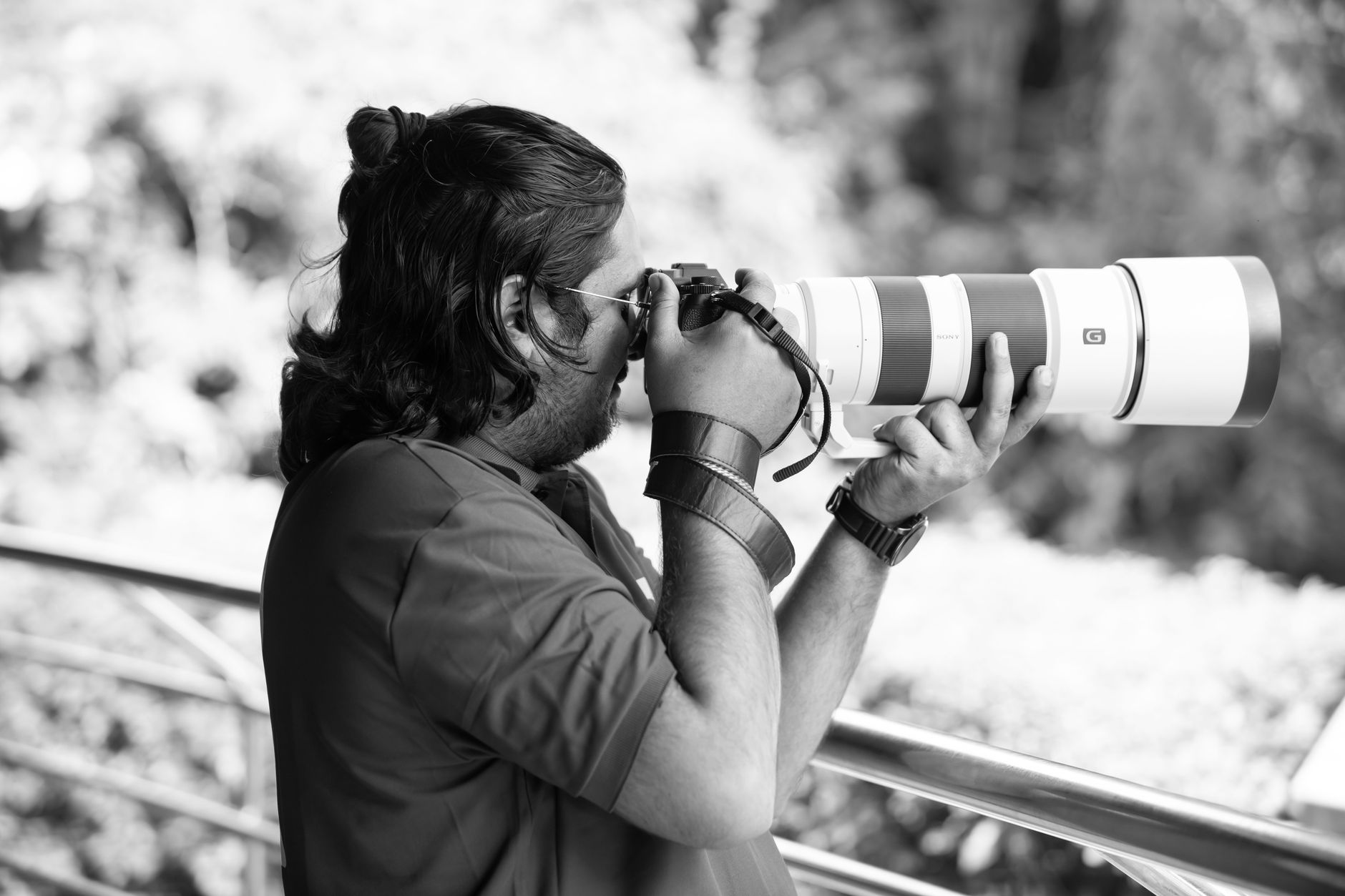
If you’ve been anywhere near a camera store or photography forum lately, you’ve noticed something: wildlife photography is having a serious moment. With the 2026 winter bird migration season kicking off and more people swapping screen time for trail time, telephoto lens sales have jumped nearly 30% compared to last year. But here’s the problem — most beginners assume they need a $2,500 lens to get started, and that myth stops a lot of talented photographers before they ever leave the parking lot.
Finding the best lens for wildlife photography beginners isn’t about maxing out your credit card. It’s about understanding which features actually matter when you’re photographing a heron at 6 a.m. and which ones are just marketing fluff. I’ve spent the past four months testing budget and mid-range telephotos in real field conditions — muddy trails, freezing mornings, and one very uncooperative osprey — to figure out what’s genuinely worth your money.
Here’s everything you need to know.
Why Your Kit Lens Won’t Cut It (And What You Actually Need)
That 18-55mm lens bundled with your camera is great for a lot of things. Wildlife isn’t one of them.
Wild animals don’t pose. They don’t wait. And they definitely don’t let you walk up close. A whitetail deer will bolt the second it hears your footsteps from 50 yards away, and most songbirds won’t tolerate you within 20 feet. That means you need reach — and lots of it.
Here’s the minimum spec list I’d recommend for any beginner wildlife lens:
- Focal length: At least 300mm (full-frame equivalent). For birds, 400mm or more is ideal.
- Autofocus speed: Fast and quiet. Slow AF means missed shots, period.
- Image stabilization: Essential if you’re handholding, which most beginners do.
- Weight: Under 3.5 pounds if you plan to hike with it. Trust me on this one.
Aperture matters less than you’d think at this stage. Yes, an f/2.8 telephoto is gorgeous, but it also costs more than most people’s entire camera setup. An f/5.6 or f/6.3 lens at the long end is perfectly usable, especially with modern camera sensors handling higher ISOs so well. If you haven’t already, check out our guide on beginner wildlife photography camera settings to pair with your new lens.
The 5 Best Lenses for Wildlife Photography Beginners in 2026
After extensive field testing, these five lenses stood out for their combination of reach, sharpness, autofocus performance, and — critically — price.
1. Tamron 150-500mm f/5-6.7 Di III VC VXD — Best Overall
This is the lens I recommend most often, and it’s not close. The Tamron 150-500mm gives you serious reach on Sony E-mount and Nikon Z-mount bodies, and the VXD linear motor autofocus is genuinely fast — it locked onto a red-tailed hawk mid-dive during my testing without hunting once.
- Price: Around $1,199 (frequently on sale for $999)
- Weight: 3.8 lbs — manageable for a few hours
- Standout feature: The 150mm wide end lets you capture environmental wildlife shots, not just tight portraits
2. Sigma 100-400mm f/5-6.3 DG DN OS Contemporary — Best Lightweight Option
If the Tamron feels too heavy, the Sigma 100-400mm is your answer. At just 2.5 pounds, it’s the lens I grab when I’m hiking more than a mile to a shooting location. Available for Sony E and L-mount.
- Price: Around $949
- Weight: 2.5 lbs
- Trade-off: You lose 100mm of reach compared to the Tamron. For larger animals at moderate distances, it’s plenty. For small birds, you’ll be cropping.
3. Canon RF 100-400mm f/5.6-8 IS USM — Best for Canon Shooters on a Budget
Canon RF-mount beginners have fewer affordable options, but this lens punches well above its price point. The f/8 aperture at 400mm sounds scary, but Canon’s in-body stabilization compensates beautifully.
- Price: Around $649
- Weight: 1.4 lbs — shockingly light
- Caveat: That f/8 aperture struggles in low light. Plan to shoot during golden hours.
4. Nikon Z 180-600mm f/5.6-6.3 VR — Best Reach for the Money
Nikon absolutely nailed this one. A 600mm reach at this price point was unthinkable three years ago. The internal zoom mechanism means the lens doesn’t extend, which keeps dust and moisture out — a big deal when you’re kneeling in wet grass.
- Price: Around $1,697
- Weight: 4.3 lbs — the heaviest on this list
- Worth it if: You’re primarily shooting birds or distant subjects and don’t mind the extra weight
5. Fujifilm XF 70-300mm f/4-5.6 R LM OIS WR — Best for Fujifilm Shooters
Fujifilm’s APS-C crop factor turns this 300mm into a 457mm full-frame equivalent. That’s impressive reach in a weather-sealed package that weighs just 1.3 pounds. Pair it with the X-H2S and its subject-detection AF, and you’ve got a wildlife setup that rivals systems costing twice as much.
- Price: Around $799
- Weight: 1.3 lbs
- Bonus: Weather-sealed, so light rain won’t end your session
The Focal Length Trap Most Beginners Fall Into
Here’s a mistake I see constantly: beginners buy the longest lens they can afford, then wonder why their photos look flat and lifeless.
More reach isn’t always better. A 600mm shot of a bird that’s just a tiny speck in a blue sky is less compelling than a 300mm shot that includes the bird’s habitat — the gnarled branch, the morning fog, the reflection in the water. Some of my favorite wildlife images from this year were shot at the wider end of my zoom range.
Here’s a practical approach:
- Start at your lens’s widest focal length and compose the scene.
- Zoom in gradually as the animal allows.
- Take both versions — tight and environmental. You’ll be surprised how often the wider shot is the keeper.
Also, remember that focal length and aperture work together. At 500mm and f/6.7, your depth of field is razor-thin. That’s great for isolating a subject, but it means your focus needs to be dead-on. Practice on stationary subjects — a perched bird, a sleeping fox — before attempting birds in flight. Speaking of which, our field guide to photographing birds in flight covers the technique side in detail.
Should You Buy New, Used, or Third-Party?
This is where beginners can save serious money without sacrificing quality.
Third-party lenses (Tamron, Sigma) have closed the quality gap dramatically. Five years ago, I’d hesitate to recommend them for wildlife. In 2026, the Tamron 150-500mm and Sigma 100-400mm are genuinely excellent — I’d put them against first-party lenses costing 40% more.
Used lenses are another smart play. Telephoto lenses tend to be well-maintained because they’re specialty tools, not everyday beaters. Check KEH, MPB, or your local camera shop. A used first-generation Sony FE 100-400mm GM can be found for around $1,400 — that’s a $2,500 lens at nearly half price.
What to avoid: Cheap, no-name telephoto lenses on Amazon promising “650-1300mm” for $150. These are manual-focus, fixed-aperture nightmares that will frustrate you into quitting. Spend your money on quality glass, even if it means less reach.
Your Next Steps
Choosing the best lens for wildlife photography beginners comes down to three questions: What camera system are you on? How far are you willing to carry it? And what’s your realistic budget?
If I had to pick one lens for a complete beginner starting today, it would be the Tamron 150-500mm — it hits the sweet spot of reach, autofocus speed, and price that nothing else matches right now. But every lens on this list will serve you well for years.
Here’s my challenge to you: pick a lens, rent it for a weekend (LensRentals and BorrowLenses make this easy), and spend one full morning at your local wildlife area. You’ll learn more in three hours of shooting than in three weeks of reading reviews. The winter migration is happening right now — the subjects are out there waiting.