
Best Lens for Food Photography Beginners: The 2026 Guide to Drool-Worthy Shots
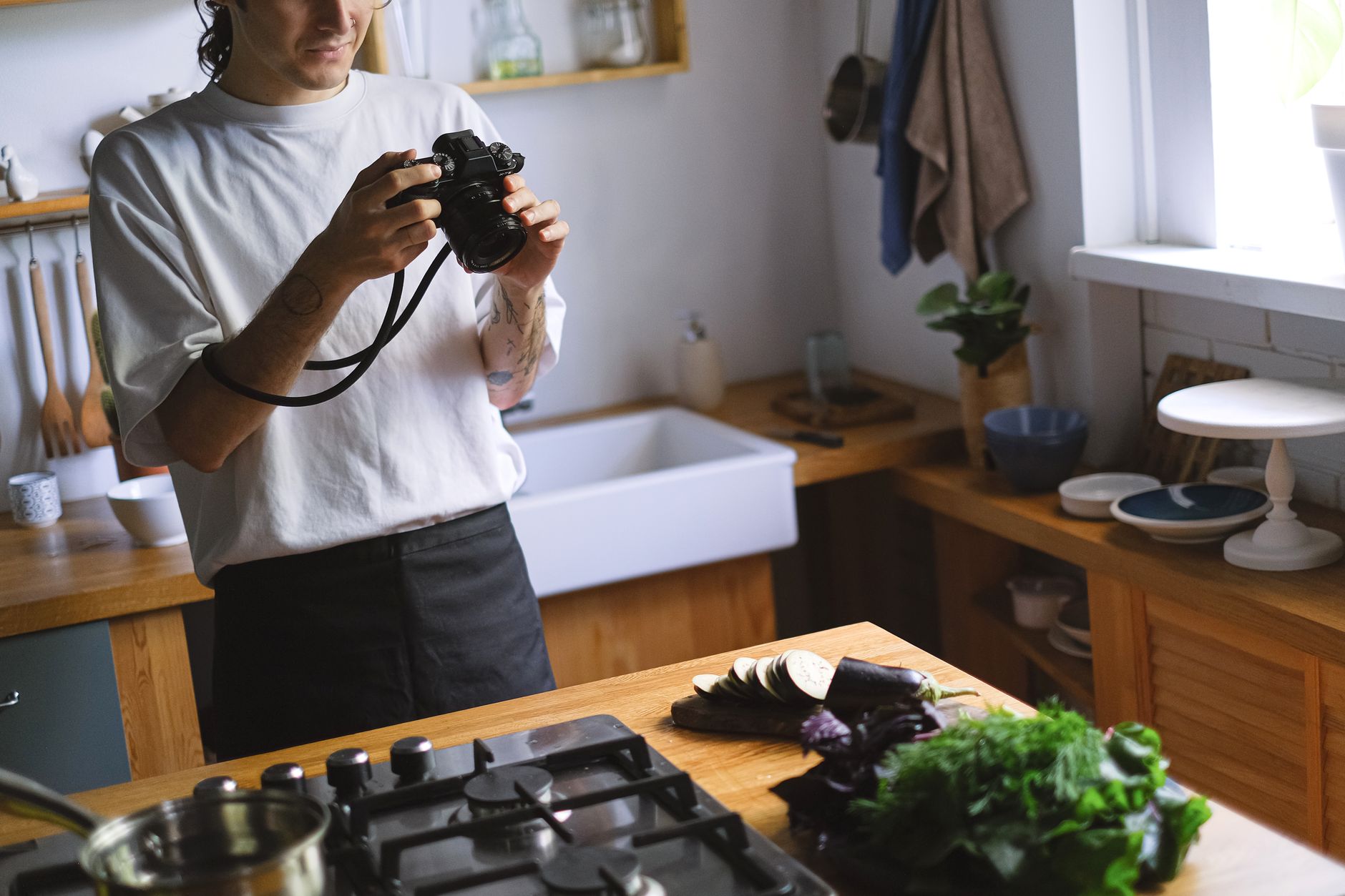
Scroll through Instagram or TikTok right now and you’ll notice something: food content has never looked better. With restaurant photography becoming a legitimate side hustle in 2026 and brands paying real money for “deceptively simple” overhead shots, more photographers are diving into food work than ever before. But here’s the thing—your kit lens is holding you back.
Finding the best lens for food photography beginners isn’t about spending thousands on exotic glass. It’s about understanding which focal lengths make steam curl beautifully off a bowl of ramen, which apertures turn cluttered backgrounds into creamy bokeh, and which lenses won’t distort your carefully styled flat lays. Whether you’re shooting for a local café, building a recipe blog, or just want your weekend brunch to look as good as it tastes, the right lens transforms everything.
Why Your Kit Lens Is Sabotaging Your Food Shots
That 18-55mm zoom that came with your camera? It’s fine for landscapes and family gatherings, but food photography exposes its weaknesses fast. Kit lenses typically max out at f/3.5-5.6, which means you can’t blur backgrounds effectively or shoot in dim restaurant lighting without cranking ISO to noisy levels.
Worse, variable aperture zooms force you to constantly adjust settings as you change focal length. When you’re working with melting ice cream or a chef who needs their dish back in ninety seconds, that friction kills shots. The best lens for food photography beginners removes these obstacles with a fixed, wide aperture and a focal length designed for close-up work.
The 50mm f/1.8: Your First Food Lens (And Why It Costs Under $200)
Ask any professional food photographer what lens they recommend for beginners, and nine out of ten will say the “nifty fifty.” A 50mm f/1.8 prime lens is the undisputed entry point for food work, and in 2026, it’s more affordable than ever—Canon, Nikon, Sony, and third-party options from Sigma and Viltrox all offer excellent versions between $125 and $250.
Here’s why it works:
- Natural perspective: On a full-frame camera, 50mm closely matches human vision. Your food looks like food, not a distorted science experiment.
- That f/1.8 aperture: Shoot at f/2.0 or f/2.8 and backgrounds melt away while keeping your subject tack-sharp. This is how you make a $12 burger look like a magazine cover.
- Low-light capability: Restaurants are dim. f/1.8 lets you shoot handheld at ISO 800-1600 instead of 6400.
- Forced creativity: No zoom means you move your feet and think about composition. This constraint accelerates learning faster than any tutorial.
Crop sensor note: If you’re shooting APS-C (Canon EF-S, Nikon DX, Sony E-mount), a 50mm behaves more like 75-80mm—still excellent for food, but you’ll need more working distance. Consider a 35mm f/1.8 instead for similar framing.
When to Go Macro: The 60mm and 90mm Options
Once you’ve mastered the 50mm, macro lenses open up texture shots that make viewers actually hungry. We’re talking the crumb structure of fresh sourdough, the crystalline sugar on a crème brûlée, the individual bubbles in a just-poured espresso.
For beginners, two macro focal lengths dominate food work:
60mm macro (crop sensor) or 90mm macro (full-frame) give you 1:1 reproduction ratio—meaning your subject projects onto the sensor at life size. The working distance is comfortable; you’re not hovering three inches from a hot plate. Popular 2026 options include the Sony 90mm f/2.8 Macro G OSS (around $1,100) and the more budget-friendly TTArtisan 100mm f/2.8 Macro (under $400, manual focus only).
The trade-off: Macro lenses are specialists. They’re slower to autofocus, heavier, and less versatile than a 50mm. Buy one only after you’ve shot 500+ food frames and know you crave that extreme close-up perspective.
The Overhead Specialist: Why 35mm Wins for Flat Lays
Flat lay food photography—shot directly overhead—exploded during the pandemic and hasn’t slowed down. In 2026, it’s the dominant style for recipe blogs, meal prep content, and e-commerce food brands. For this specific angle, 35mm on full-frame (or roughly 24mm on crop sensor) is the sweet spot.
Here’s the geometry: shooting straight down from 3-4 feet above your table, a 35mm captures a generous scene without the edge distortion that plagues wider lenses. Your carefully arranged props stay rectangular; your plates don’t curve at the frame edges.
The Sigma 35mm f/1.4 Art (around $650 used) is a 2026 favorite for this work—razor-sharp at f/4 where most flat lays live, with beautiful color rendition that makes greens pop and browns look rich rather than muddy.
Aperture Strategy: The Numbers That Actually Matter
New food photographers obsess over the wrong settings. You don’t need f/1.4 for everything—in fact, shooting wide open often ruins food shots by making depth of field too shallow. Only one sesame seed in focus? Not appetizing.
Here’s your practical aperture cheat sheet:
| Shot Type | Aperture | Why |
|---|---|---|
| Hero dish, blurred background | f/2.0 - f/2.8 | Isolates subject, creamy bokeh |
| Full plate, some context | f/4 - f/5.6 | Keeps entire dish sharp, softens background |
| Flat lay with props | f/5.6 - f/8 | Everything in focus, professional look |
| Extreme macro detail | f/8 - f/11 | Counteracts razor-thin macro depth of field |
Pro tip: Focus on the front edge of your main subject, not the center. Our eyes expect the nearest part of food to be sharpest; back-focus feels “off” even if technically correct.
Building Your Food Kit: What to Buy First
Let’s get practical. If you’re starting from zero in 2026, here’s the priority order:
- 50mm f/1.8 ($125-250): Shoot everything with this for three months. Master manual aperture control, learn how distance affects perspective, build your styling skills.
- Reflector and diffuser ($30-50): Light control matters more than any lens upgrade. A $20 collapsible reflector transforms harsh window light.
- 35mm f/1.8 or f/1.4 ($300-650): Add when you need overhead capability or tighter spaces.
- Macro lens ($400-1,100): Only when you’ve identified specific texture shots you can’t achieve with extension tubes or close-focusing on your 50mm.
Skip the 24-70mm f/2.8 zoom for now. Yes, pros use them, but they cost $1,200+ and won’t teach you focal length discipline like primes will.
Conclusion: Start Simple, Shoot Delicious
The best lens for food photography beginners in 2026 isn’t the most expensive option—it’s the one that removes technical barriers between you and the shot. A 50mm f/1.8 delivers 90% of professional food photography capability for under $200. Add a 35mm when flat lays call, consider macro when texture obsession hits, but start with that nifty fifty.
Your action step this week: find one local restaurant, café, or even your own kitchen. Shoot the same dish at f/2.0, f/4, and f/8. Compare how background separation changes the mood. That hands-on experiment teaches more than any gear review—including this one.
The food photography world in 2026 rewards authentic, appetite-appealing images over sterile perfection. Your lens is just the tool. Now go make something delicious look delicious.