
Atmospheric Night Photography Settings 2026: 7 Presets for Mood, Mist, and Story
The night photography conversation in 2026 has shifted. With PetaPixel’s “40 Tips to Take Better Photos in 2026” dominating feeds and AI denoising now standard in cameras like the Sony A7RV and Nikon Z9 II, the challenge isn’t capturing anything in darkness—it’s capturing feeling. Everyone can shoot a sharp Milky Way now. But atmospheric night photography? That’s where the real craft lives.
This guide gives you seven complete atmospheric night photography settings for 2026, each designed for a specific mood and environment. No generic “start at ISO 3200” advice. These are field-tested combinations for the moments when weather, light, and story collide.
The Foundation: Why Atmospheric Night Photography Demands Different Rules
Standard night-sky tutorials optimize for star points and minimal noise. Atmospheric work deliberately breaks those rules. You’re chasing haze, water droplets, artificial glow diffusion, and the emotional weight of obscured detail.
The gear baseline hasn’t changed much, but the approach has. In 2026, most photographers are shooting mirrorless with dual-gain ISO sensors (typically clean at ISO 400 and ISO 3200, with a noise cliff between). Knowing your camera’s dual-gain points matters more than ever for atmospheric work, because you’ll often push ISO higher than “proper” technique suggests.
Three principles govern these settings:
- Embrace diffusion: Moisture, fog, and pollution become collaborators, not enemies
- Expose for mood, not detail: Deep shadows and blown highlights serve the story
- Motion is texture: Longer exposures than standard night work create painterly effects
Preset 1: Fog-Layered Street Scenes (ISO 1600, f/2.8, 2–4 seconds)
This is your urban mystery preset. Fog acts as a natural softbox, scattering streetlights into glowing orbs. The longer exposure lets headlights and taillights paint streaks through the mist.
Settings breakdown:
- Aperture: f/2.8 for selective glow, or f/5.6 for defined light rays
- Shutter: 2–4 seconds captures motion without losing fog texture
- ISO: 1600 on dual-gain cameras (first clean point)
- White balance: Tungsten (3200K) or manual 2800K for cinematic amber-teal contrast
- Focus: Manual, 3–5 meters, accepting that distant subjects dissolve
Pro tip for 2026: New AI subject detection struggles with fog. Turn it off. Use focus peaking at maximum sensitivity and trust the atmospheric falloff.
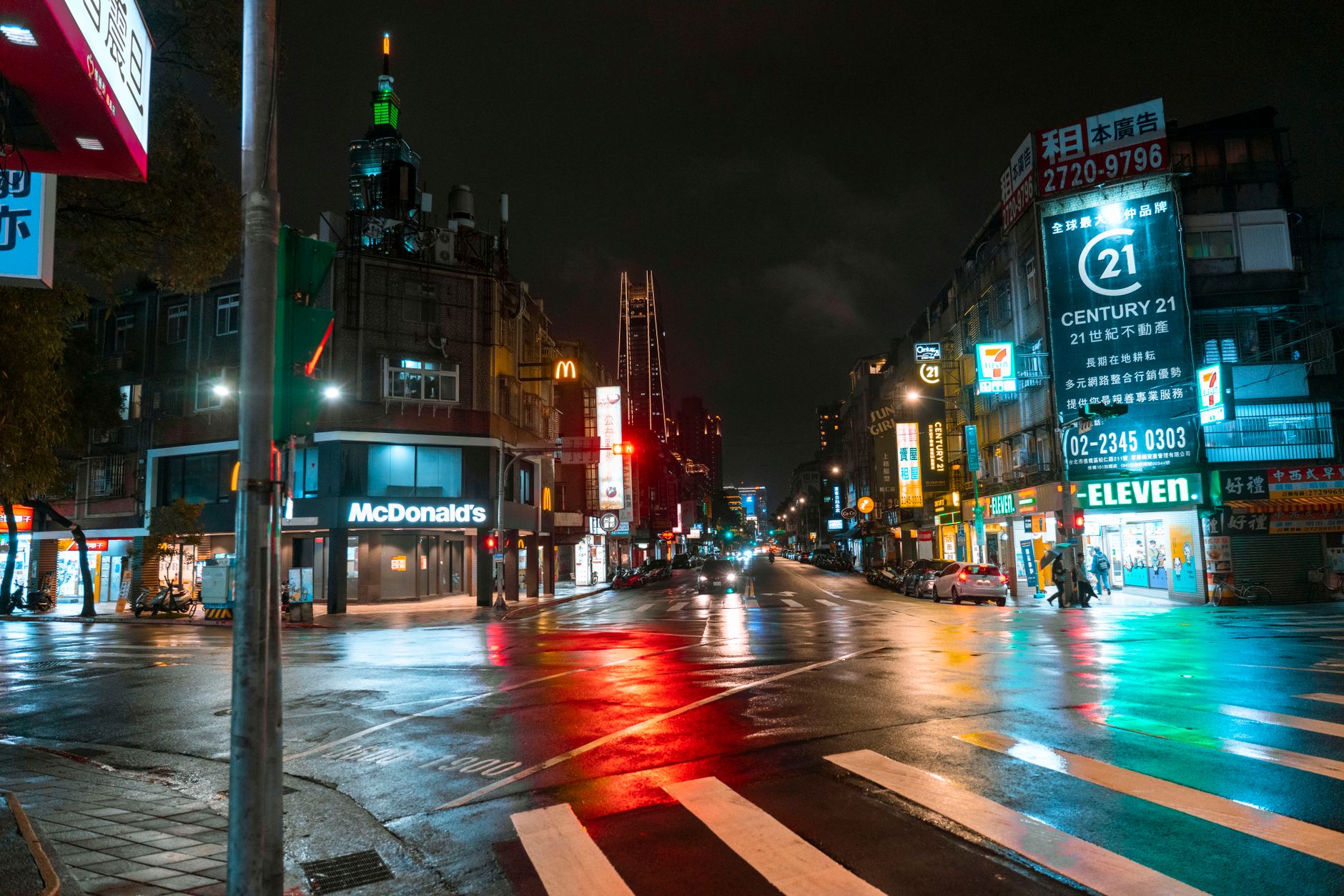
Preset 2: Rain-Slicked Neon Reflections (ISO 3200, f/1.4, 1/60 second)
When rain hits neon signage, you get layered color reflections that no preset pack can replicate. This preset prioritizes freezing raindrop trails while maintaining ambient glow.
Settings breakdown:
- Aperture: f/1.4–f/1.8 for maximum light and bokeh separation
- Shutter: 1/60 second balances rain streak length with handholdability
- ISO: 3200 (second dual-gain point on most 2026 bodies)
- Stabilization: In-body only—tripods in rain are misery
- Lens: 35mm or 50mm prime; zooms rarely open wide enough
The magic happens in puddle framing. Shoot from 12–18 inches above wet pavement to double your light sources. In 2026, several photographers are gaining traction with “puddle-only” Instagram series—this is how they do it.
Preset 3: Coastal Mist and Moonlight (ISO 800, f/4, 30 seconds)
Ocean fog with moonlight creates an ethereal, almost infrared quality. The moisture reflects moonlight upward, filling shadows that would otherwise go black.
Settings breakdown:
- Aperture: f/4 for depth of field; waves need definition
- Shutter: 30 seconds with 2-second timer (or app trigger)
- ISO: 800 preserves highlight detail in moonlit water
- Timing: Rising or setting moon, not overhead—angle creates texture
- Essential gear: Microfiber cloth, checked every 90 seconds
Critical 2026 update: Newer cameras have “moisture detection” warnings that trigger unnecessarily in fog. Ignore them unless the sensor actually shows spots. Manufacturers overcalibrated this feature last firmware cycle.
Preset 4: Firelight and Human Presence (ISO 6400, f/1.8, 1/30 second)
Campfires, patio heaters, candle arrays—any scene where warm light meets cool ambient. This is the most emotionally resonant atmospheric preset, and the most technically demanding.
Settings breakdown:
- Aperture: f/1.8 for subject isolation in cluttered environments
- Shutter: 1/30 second, handheld with stabilization
- ISO: 6400, accepting noise as texture (denoise selectively in post)
- White balance: Daylight (5500K) to preserve fire’s warmth against blue shadows
- Exposure: Spot meter on brightest flame, then +1 EV
The 2026 approach: Let faces go partially shadowed. The “perfectly lit” campfire portrait is dated. Current editorial work favors obscured features, suggesting narrative without completing it.
Preset 5: Snowfall Under Streetlights (ISO 3200, f/2.8, 1/125 second)
Snow at night is extraordinarily reflective—exposure compensation drops 1–2 EV from dry conditions. The goal here is individual snowflake definition against soft background glow.
Settings breakdown:
- Aperture: f/2.8 for snowflake bokeh circles
- Shutter: 1/125 second freezes moderate snowfall
- ISO: 3200 compensates for fast shutter and reflected-light exposure drop
- Flash: Never. Destroys the atmospheric relationship between subject and environment
- Lens hood: Essential. Snow on front element creates unpredictable artifacts
Temperature note: 2026 winter gear includes heated lens elements from several manufacturers. At $200–400, they’re worth it for dedicated snow shooters. Battery drain is significant—bring spares.
Preset 6: Industrial Haze and Sodium Vapor (ISO 2500, f/4, 8 seconds)
Factory districts, shipping yards, and infrastructure zones emit unique atmospheric signatures. Sodium vapor lights (rapidly being replaced by LEDs—shoot them while they last) create monochromatic warmth that color grading cannot replicate.
Settings breakdown:
- Aperture: f/4 for environmental context; these scenes need depth
- Shutter: 8 seconds captures smoke/haze drift without over-smoothing
- ISO: 2500, between gain points, accepting slight noise for color fidelity
- White balance: Sodium preset if available, or manual 2000K
- Safety: Scout daytime. These locations change character dramatically at night
Documentary angle: This is disappearing light. Cities worldwide are replacing sodium vapor with tunable white LED. The “Blade Runner” aesthetic is literally going extinct—atmospheric night photography in 2026 is partly archival work.
Preset 7: Post-Storm Clearing (ISO 400, f/8, 15 seconds)
The most overlooked atmospheric condition: immediately after rain, when clouds break and wet surfaces mirror sky. This preset captures the transition moment when darkness still dominates but light is returning.
Settings breakdown:
- Aperture: f/8 for starburst effects if moon or distant lights appear
- Shutter: 15 seconds balances cloud movement with structure
- ISO: 400, maximum quality, since wet reflection amplifies available light
- Timing: 15–30 minutes after rain stops, before surfaces dry
- Composition: Low horizon, maximum sky reflection
This preset exemplifies why atmospheric night photography settings in 2026 differ from traditional night-sky work. You’re not waiting for perfect conditions. You’re exploiting transitional, deteriorating conditions for maximum emotional impact.
Building Your Atmospheric Night Photography Workflow
These presets aren’t rigid rules. They’re starting points for environments that resist standardization. In 2026, the most successful night photographers carry laminated setting cards—not because they can’t remember, but because decision fatigue at 2 AM is real.
Your post-processing should honor the atmosphere. Heavy noise reduction destroys the texture that fog, rain, and haze create. Selective sharpening on focal points only. Preserve chromatic aberration in sodium vapor scenes—it reads as authentic light behavior.
The PetaPixel “40 Tips” framework emphasizes deliberate practice. Apply it here: Choose one preset monthly, shoot it ten times in varying conditions, internalize the deviations. Atmospheric night photography rewards repetition more than any other genre.
Conclusion: Atmospheric Night Photography Settings 2026 and Beyond
Mastering atmospheric night photography settings in 2026 means rejecting the pursuit of technical perfection for its own sake. The cameras are already good enough. The software already fixes enough. What’s left is intention—choosing to shoot when conditions are difficult, when visibility is compromised, when the story requires obscurity.
Start with Preset 1 this week. Find fog. Shoot until your settings become instinctive. Then move through the list, building a vocabulary for darkness that goes beyond documentation into evocation. The night has always been atmospheric. Finally, our approach to capturing it is catching up.